Spring Hill homes get mold the same way most Middle Tennessee homes do: water from leaks, storms or a damp crawl space that stays wet too long. The Duck River has flooded parts of the city before. Call the number on this page to be connected with a local mold remediation company in Spring Hill.
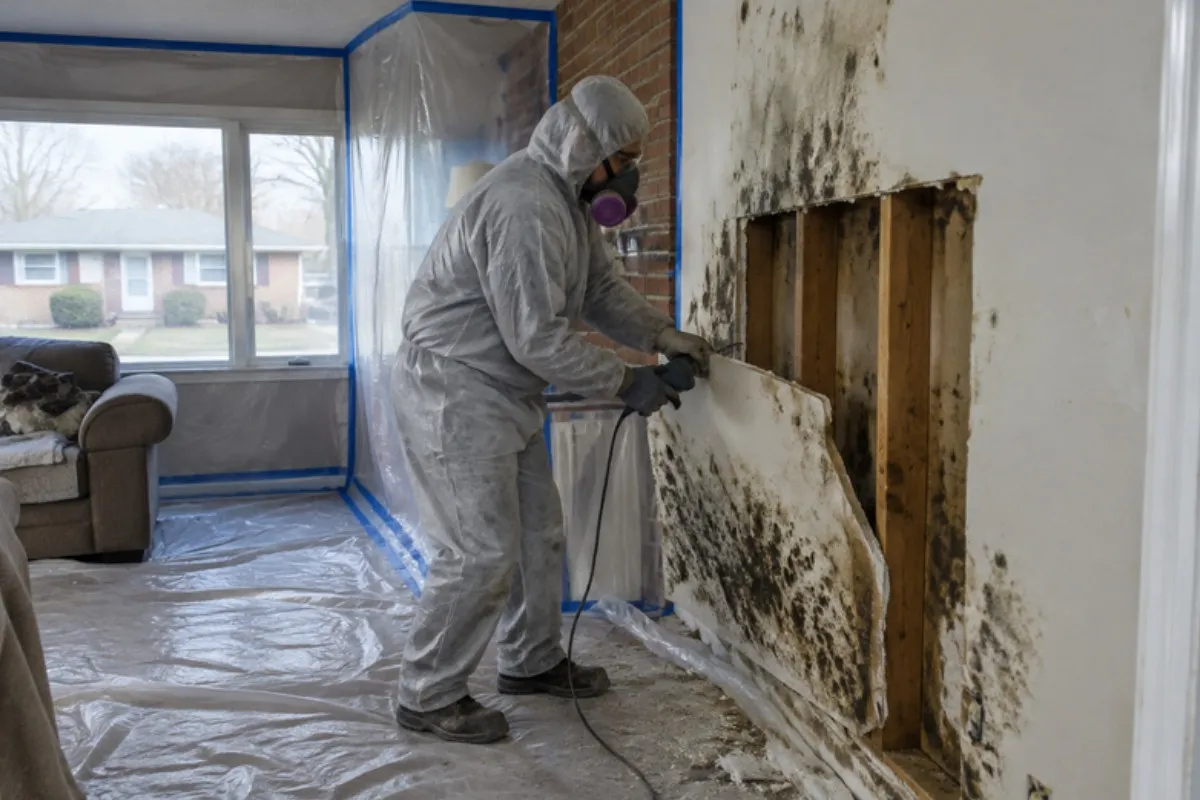
Mold services in Spring Hill
Two counties, one city
Spring Hill sits about 29 miles south of downtown Nashville and straddles the line between Williamson and Maury counties. It has grown quickly and is home to the GM Spring Hill Manufacturing plant, once the Saturn plant. Because of the county split, some services depend on your address, but the city itself issues building permits and enforces its codes on both sides.
The Duck River and May 2010
About 13.2 inches of rain fell over two days in May 2010, and the Duck River overran parts of Spring Hill. Flooding like that is the clearest path to mold: drywall, insulation and flooring that sit wet more than 24 to 48 hours usually have to come out, and EPA says to assume growth in any flooded home that couldn't be dried in that window. The Tennessee Department of Health also notes that mold can start within 48 hours of flooding.
The city's Building Codes and Inspection Department checks construction for conformance with the National Flood Insurance Program and FEMA rules as well as the city's Unified Development Code. If your property is near the river or a drainage path, ask the department about flood requirements before rebuilding.
Everyday moisture
Most mold calls don't follow a flood. They follow an attic that runs hot and humid in July, a crawl space where the vapor barrier has shifted, a shower with failing grout or an AC drain line that clogs. Middle Tennessee summers are humid enough that anything cool, like a duct or a water line, can collect condensation. A quick check every few months, looking under sinks, around the water heater and in the crawl space, catches most problems while they're small. EPA puts the line at about 10 square feet: smaller patches are often homeowner jobs, while larger areas or a lot of water damage call for professional help.
Who to contact
- Building permits: City of Spring Hill Building Codes and Inspection Department, for rebuilding after mold removal.
- Codes complaints: the city's Codes Enforcement Division handles health and safety issues and takes reports through the Citizen Portal, a complaint registration form or by phone. Renters with an unfixed leak can start there.
- Health department: the Williamson County Health Department in Franklin serves the Williamson side; on the Maury side, the Maury County Health Department in Columbia is the local office.
EPA notes that mold can irritate the eyes, skin, nose, throat and lungs, and that people with asthma or weakened immune systems should stay away from moldy areas. A health professional is the right contact for health questions.
Licensing
A Tennessee contractor's license is required for jobs of $25,000 or more, and S-F is the state's mold remediation classification. Neither Williamson nor Maury is on TDCI's list of Home Improvement license counties. We connect callers with independent local companies; check the one you hire on TDCI's Verify a License search.
Common questions in Spring Hill
Did Spring Hill flood in May 2010?
Which health department serves Spring Hill?
Who issues building permits in Spring Hill?
Can I clean a small patch of mold myself?
Nearby cities and towns
Sources
- Wikipedia: Spring Hill, Tennessee
- Williamson Herald: Flood impact from 10 years ago still felt
- City of Spring Hill: Building Codes and Inspection Information
- City of Spring Hill: Municipal Codes Enforcement
- Tennessee Department of Health: Mid-Cumberland Region
- Tennessee Department of Health: Local health departments
- Tennessee Department of Health: Healthy Homes
- EPA: Homeowner's and Renter's Guide to Mold Cleanup After Disasters (pdf)
- EPA: Mold Cleanup in Your Home
- Tennessee Contractor Classification Outline (TDCI)
- TDCI Board for Licensing Contractors: Bidding and Contractor License Requirements (pdf)
Last updated: