Mold in a wall almost always means the cavity has been wet for a while, from a slow plumbing leak, a window or siding leak, flooding, or condensation behind furniture on an outside wall. Fixing it means finding and stopping the water, cutting out moldy drywall and insulation, cleaning the framing, and drying before the wall is closed back up. Call the number on this page to be connected with a local mold remediation company in Nashville.
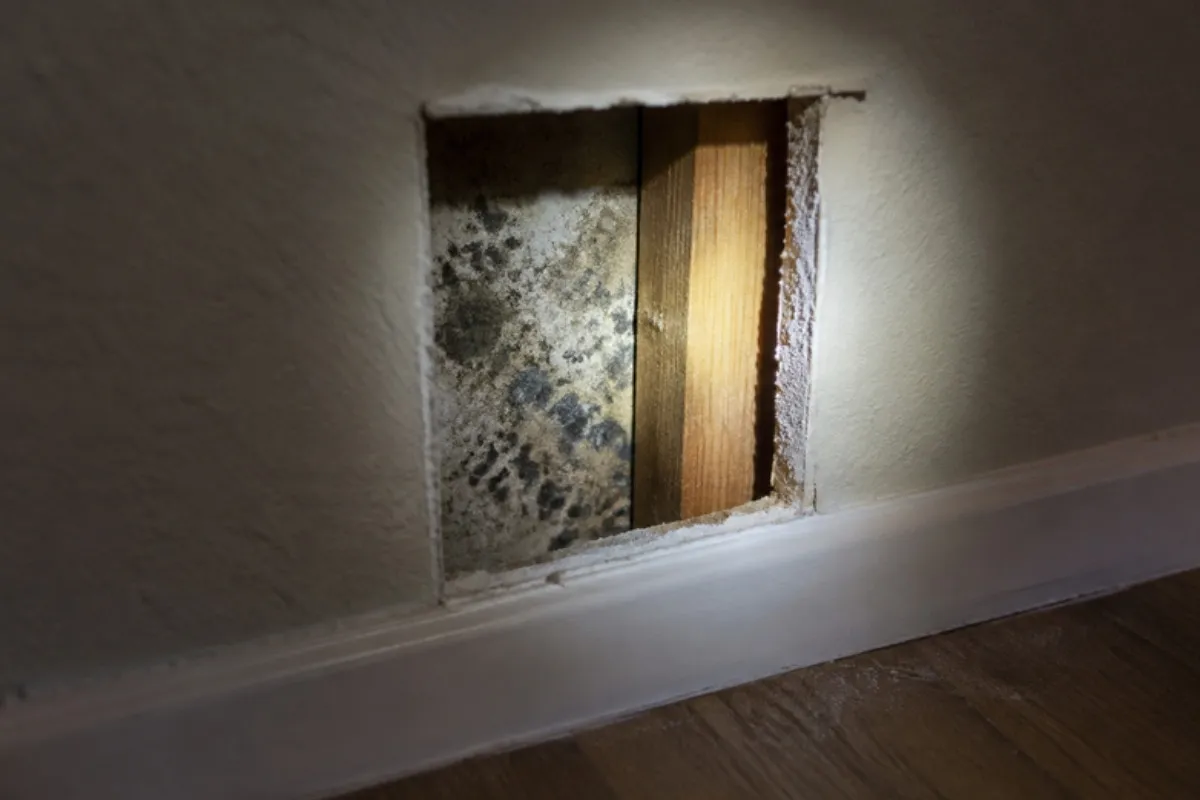
Signs the problem is inside the wall
- A musty smell strongest near one wall, cabinet or closet.
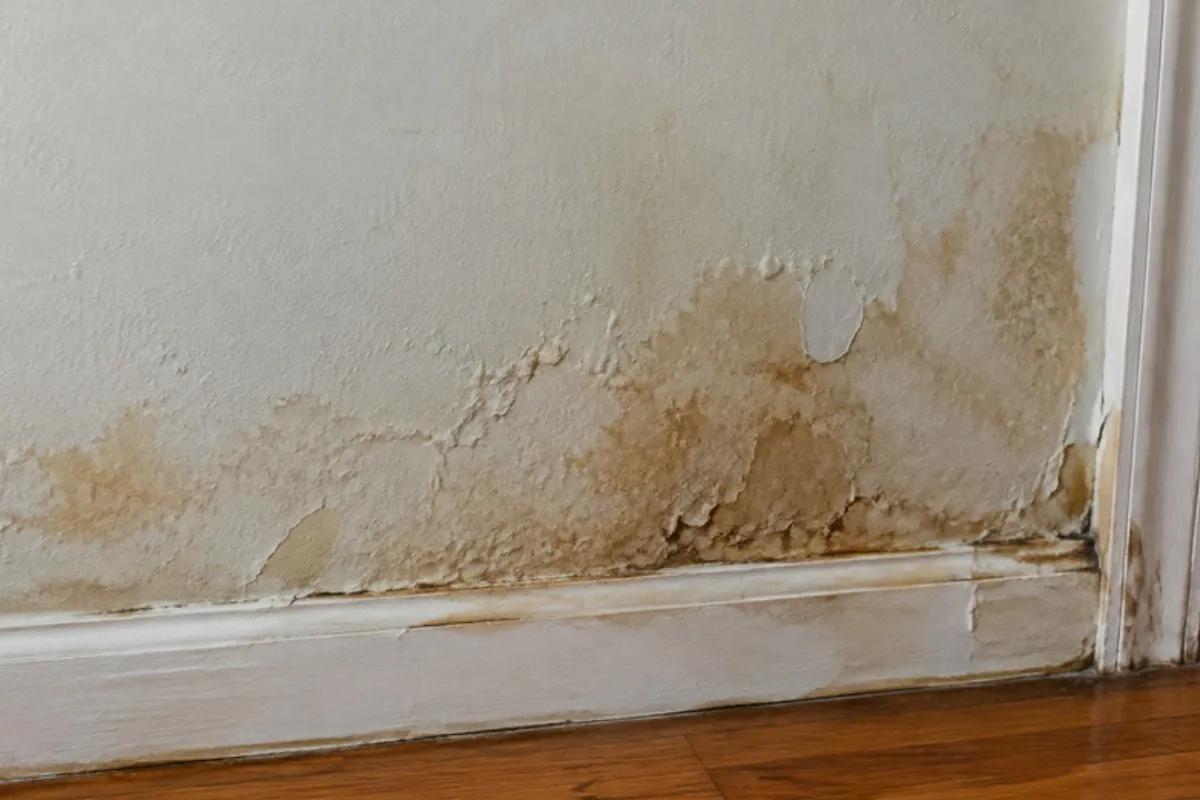
- Paint that bubbles, peels or looks wavy, or baseboards pulling away.
- Drywall that feels soft or crumbles at the bottom edge.
- A stain that reappears after you paint over it.
- Spotting on the back of furniture pushed against an outside wall.
Painting over these signs only hides them. EPA specifically says not to paint or caulk over mold.
Where the water usually comes from
Walls behind showers, tubs, toilets, kitchen sinks, dishwashers and washing machines are the usual suspects, along with the wall under a leaky window. In Nashville, flooding is another major cause. The May 2010 flood and the March 2021 flash flooding sent water into homes along the Cumberland, Mill Creek and smaller creeks, and in that kind of event the wall cavity soaks up water well above the visible waterline. EPA's disaster guidance says that if a flooded home couldn't be dried within 24 to 48 hours, assume mold has grown.
How a wall is checked without tearing it all out
An inspector will typically use a moisture meter and often a thermal camera to map wet areas, and may cut a small inspection hole or use a borescope to look inside. Ask for the moisture readings in writing. Air sampling can't tell you which cavity is affected, and EPA notes there are no federal limits for mold spores, so readings alone don't define a scope.
What removal looks like
- Stop the leak. A plumber or roofer may need to come first.
- Set up containment, often plastic sheeting with negative air, so dust stays in the work area.
- Cut out drywall past the visible growth and remove wet insulation. Both are porous and usually discarded, per EPA.
- HEPA vacuum and clean the studs and plates, then dry them, confirmed with a meter.
- Close up only after the framing is dry. Rebuild and painting may be separate trades.
If load-bearing members have to be replaced, Metro Codes requires a permit for that kind of repair. Drywall and painting alone generally do not need one.
Cost and hiring
Angi's national range for mold in walls is wide, about $1,000 to $20,000, because one bathroom wall and a flooded ground floor are very different jobs. Middle Tennessee prices vary. In Davidson County, residential jobs of $3,000 or more call for the state Home Improvement license, and $25,000 or more a contractor's license with the S-F classification. Verify on TDCI's Verify a License search. Angi suggests a separate company for testing and remediation, which keeps the clearance check independent.
Mold in Walls & Drywall questions from Nashville homeowners
Can mold be cleaned off drywall instead of replacing it?
How far past the stain will they cut?
Is mold in my walls a health concern?
I rent in Nashville and there is mold in my wall. What can I do?
Related mold services in Nashville
Helpful guides
Mold in Walls & Drywall in nearby cities and towns
Davidson County
Williamson County
Sumner County
Wilson County
Rutherford County
Robertson County
Cheatham County
Maury County
Sources
- EPA: Mold Cleanup in Your Home
- EPA: A Brief Guide to Mold, Moisture and Your Home
- EPA: Mold Information Slideshow (testing and sampling)
- EPA: Homeowner's and Renter's Guide to Mold Cleanup After Disasters (pdf)
- National Weather Service Nashville: May 2010 flood
- Metro Codes: Residential Building Permits
- Metro Nashville: Mold, Moisture, and Your Home (pdf)
- Angi: How Much Does Mold Remediation Cost? (2026 data)
- Angi: How to Hire a Mold Remediation Company
- Tennessee Contractor Classification Outline (TDCI)
- TDCI: Bidding FAQs
- TDCI: Bidding and Contractor License Requirements (pdf)
Last updated: