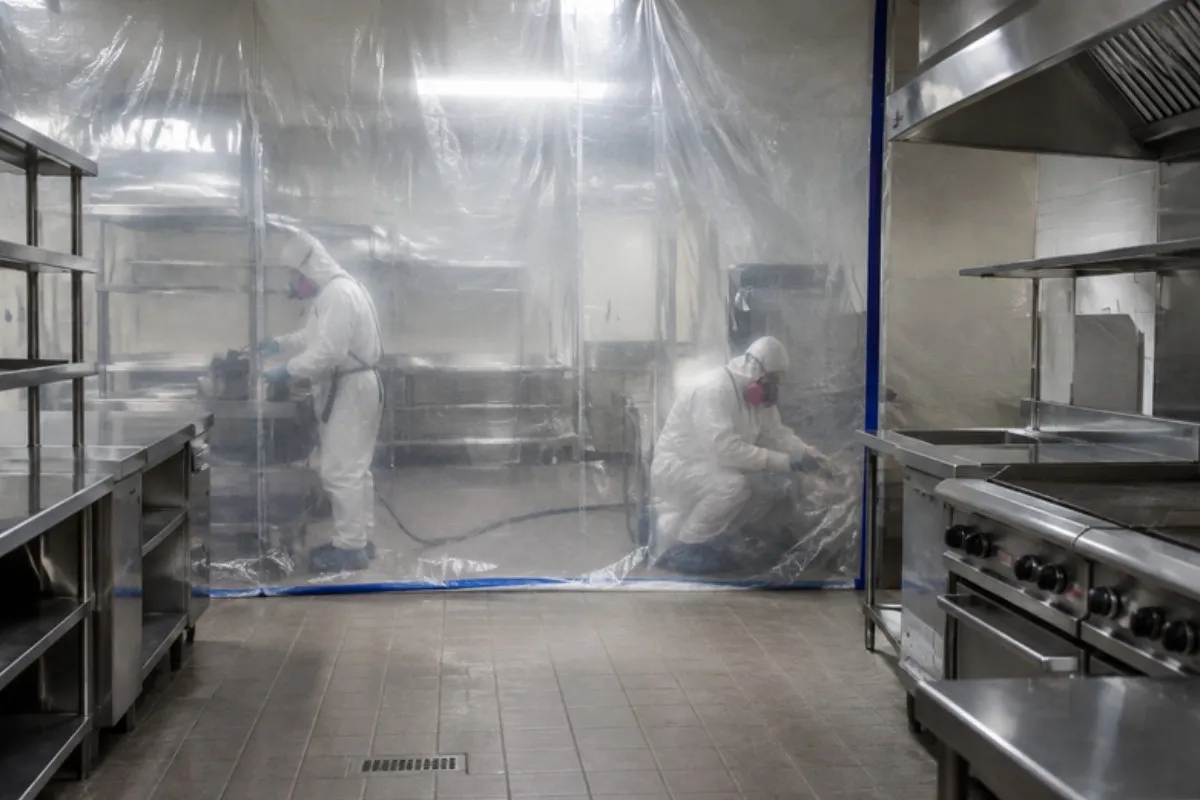
Commercial mold work in Ashland City means planning around the people who keep using the building: a written scope, a sealed work zone and a schedule that keeps the doors open where it can. EPA's guide for schools and commercial buildings is the playbook most companies follow. Call the number on this page to be connected with a local mold remediation company in Ashland City.
Ashland City is a small county seat about 18 miles from Nashville, built in bottomland on the northeast bank of the Cumberland River with Sycamore Creek just north of town. Offices, shops and churches around the Cheatham County Courthouse square share that river air, and in May 2010 Cheatham County coverage described a flooded post office, a Corps of Engineers building and a school along with mud-filled homes. Mold in a building other people depend on needs a plan, not just a spray bottle.
What to do this week
- Find the water. Roof drains, a leaking supply line in a shared wall, or an air handler dripping into a ceiling cavity are typical in a commercial space. Repair comes first.
- Mark the area off. Keep staff and customers away from visible growth and wet ceiling tile.
- Decide about the air system. EPA says not to run HVAC you suspect is contaminated, so ask whether one zone can be shut down without closing the building.
- Write down who uses the space, including anyone with asthma or a weakened immune system, who should stay clear of the work.
- Take photos and keep invoices from the leak repair for your insurer and your lease file.

What you see and what it usually means
| What you see | Likely cause |
|---|---|
| Brown rings on drop-ceiling tiles | Roof leak or condensation from ducts above the grid |
| Musty odor that is worse in one wing | A wet zone, often near one air handler or restroom wall |
| Spotting low on drywall in a storage room | Past high water or a slow plumbing leak wicking upward |
| Damp, smelly carpet near an entrance | Water tracking in under doors or a grade that drains toward the building |
What drives the bid
The size of the affected area matters most. Angi's national figures for home jobs run $10 to $25 per square foot, and commercial bids in Cheatham County will differ, so treat those numbers as a rough reference only. After-hours scheduling, containment around occupied rooms, how much drywall and ceiling tile is removed, whether ductwork is involved and whether the company handles rebuild all move the price. Any project of $25,000 or more requires a Tennessee contractor's license, and mold remediation has its own S-F classification you can confirm on TDCI's Verify a License search. Structural repairs inside town limits go through the Town of Ashland City Building Codes, Planning and Zoning office on N. Main Street.
Commercial Mold Remediation questions in Ashland City
How quickly does a wet building need to be dried?
Who handles permits for repairs after the mold is removed?
What license should a commercial mold contractor hold in Tennessee?
Where can occupants ask about health concerns?
More mold services in Ashland City
Commercial Mold Remediation nearby
Helpful guides
Sources
- EPA: Mold Remediation in Schools and Commercial Buildings (pdf)
- EPA: Mold Cleanup in Your Home
- Angi: How Much Does Mold Remediation Cost? (2026 data)
- Tennessee Contractor Classification Outline (TDCI)
- TDCI: Bidding FAQs
- Ashland City, Tennessee (Wikipedia)
- WKNO: Cheatham County recovery a step behind Nashville (May 2010)
- Town of Ashland City: Building Codes, Planning and Zoning
- Tennessee Department of Health: Local Health Departments
- Tennessee Department of Health: Healthy Homes
Last updated: