Attic mold in Ashland City nearly always traces back to moisture reaching the roof deck, whether from humid house air condensing in winter, a storm leak or a bath fan venting into the insulation. Removal means cleaning or replacing the affected wood and insulation and correcting that moisture. Call the number on this page to be connected with a local mold remediation company in Ashland City.
Attics in a Cumberland River town
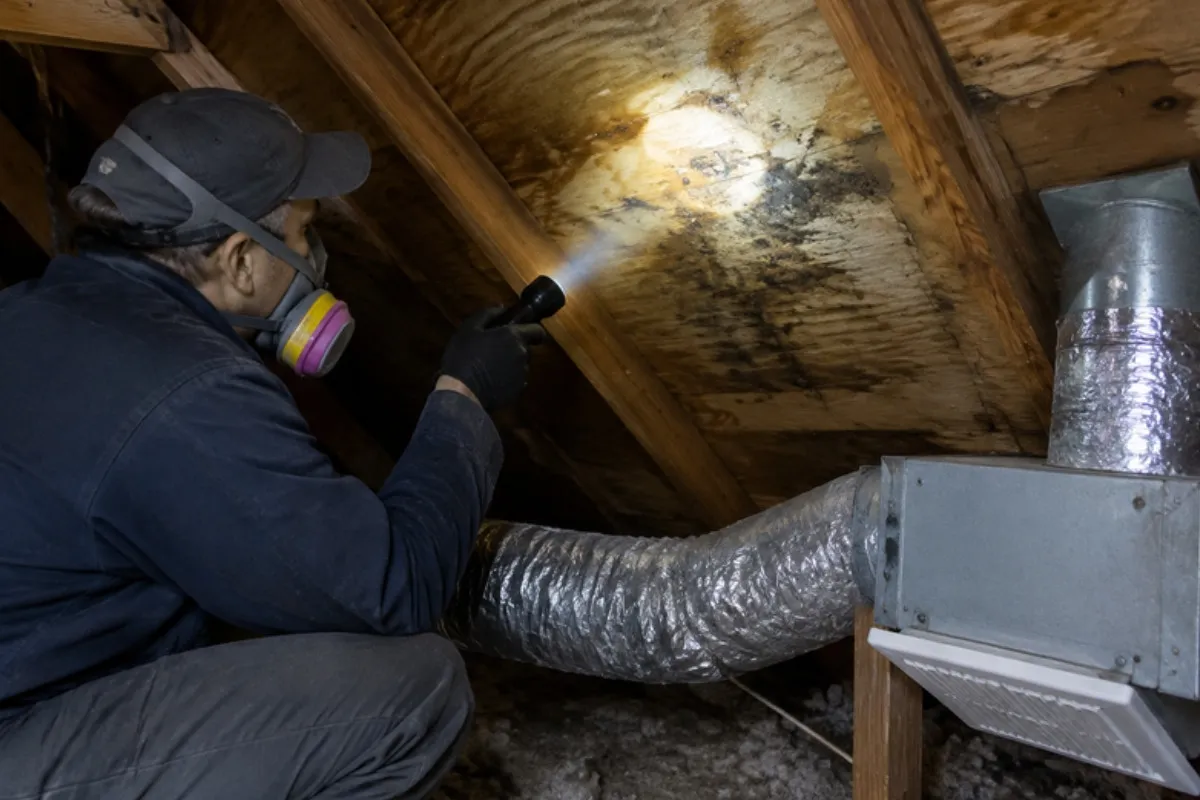
Ashland City, the Cheatham County seat about 18 miles from Nashville, sits in bottomland on the northeast bank of the Cumberland River, with Cheatham Lake close by and Sycamore Creek just north of town. During the May 2010 flood, search parties worked by boat near Ashland City. Even in an ordinary year, low ground beside that much water keeps summer air heavy, and a house that draws damp air in at the bottom carries some of it all the way to the top. Up in the attic, that moisture shows up as condensation on cold roof decking in winter and as sweating on ductwork when the AC runs hard in July. Add a roof that let a spring storm in, and the sheathing can stay wet long enough for mold to take hold.
What to do once you spot it
- Stay off the insulation as much as you can and don't scrape or sweep the stains; disturbing growth puts spores in the air.
- Notice where the staining sits. A broad gray film on one slope points to condensation, while a ring or streak around a vent pipe, chimney or valley points to a leak.
- Find where the bathroom and kitchen fans end. A duct that stops in the insulation instead of passing through the roof or a wall is a frequent culprit.
- If a furnace or air handler sits in the attic and the cabinet or ducts look moldy, EPA advises against running a system you think is contaminated.
- Photograph the area and note the date, especially after a storm.
- Ask for moisture readings that confirm the source before anyone prices the cleaning.
What you see and what usually causes it
| What you see | Likely cause |
|---|---|
| Gray or black film across the north-facing decking | Winter condensation from house air leaking upward |
| Dark ring around a plumbing vent or chimney | Flashing leak |
| Rusty or frosted nail tips | Moist air meeting cold sheathing |
| Matted, stained insulation in one spot | Roof leak or sweating duct above it |
| Musty smell in an upstairs closet or at the hatch | Growth in the space overhead |
Cost and paperwork
Angi puts attic mold remediation at roughly $1,000 to $4,000 nationally; Middle Tennessee prices vary. Attic size, how tight the access is, the amount of insulation hauled out and any roof or venting repairs (often priced separately) set the total. Replacing rotten decking or rafters is building work, and permits for that inside town limits come from Ashland City Building Codes, Planning and Zoning through the town's iWorQ portal. Cheatham County isn't one of the counties on the state's Home Improvement license list, but a project of $25,000 or more requires a Tennessee contractor's license, and mold remediation is the S-F classification. Renters whose landlord leaves a roof leak unrepaired can file a property maintenance complaint with Ashland City Code Enforcement.
Attic Mold Removal questions in Ashland City
Why is the mold only on one side of my attic roof?
Can I clean attic mold myself?
Does moldy attic insulation have to be replaced?
I rent. Who handles mold in the attic?
More mold services in Ashland City
Attic Mold Removal nearby
Sources
- Ashland City, Tennessee (Wikipedia)
- WKNO: Cheatham County recovery a step behind Nashville (May 2010)
- Town of Ashland City: Building Codes, Planning and Zoning
- EPA: Mold Cleanup in Your Home
- EPA: A Brief Guide to Mold, Moisture and Your Home
- Angi: How Much Does Mold Remediation Cost? (2026 data)
- Tennessee Contractor Classification Outline (TDCI)
- TDCI: Bidding FAQs
Last updated: